ServiceNow DevOps (Development Operations) is a set of platform capabilities that connects software development, IT operations, and service management into a single, automated workflow. Its purpose is to remove friction between development and operations teams by integrating CI/CD tools, change management, and operational visibility – so organizations can deliver software faster, safer, and with less risk. Briefly, ServiceNow DevOps provides governance and insight across the software delivery lifecycle without slowing delivery velocity. ServiceNow DevOps emerges as a pivotal framework that bridges the gap between operations and development. This integration facilitates a culture of collaboration and continuous improvement, propelling organizations toward operational excellence and innovation.
What Does ServiceNow DevOps Do?
What does ServiceNow DevOps do? It automates the software development lifecycle, enabling teams to deploy updates faster and more efficiently. Also, it integrates seamlessly with existing agile tools to enhance visibility and control over the pipeline, from coding to deployment. Furthermore, Service Now DevOps empowers teams with real-time insights, facilitating data-driven decisions that optimize performance and reduce risks. It answers a critical question for modern enterprises: How do we move fast without breaking things or compliance?
Who Uses ServiceNow DevOps?
ServiceNow DevOps is commonly used by:
- Enterprise DevOps teams
- Platform engineering and SRE teams
- Organizations operating regulated or complex environments
- Companies scaling CI/CD across multiple teams and services
It is especially valuable where speed, governance, and reliability must coexist.
How Do I Enable DevOps in ServiceNow?
Enabling DevOps in ServiceNow begins with configuration the DevOps plugin, which provides access to a suite of tools designed to streamline the development process. This setup allows for creating and managing CI/CD pipelines directly within the ServiceNow platform, enhancing efficiency and collaboration.
What is the Integration Between DevOps and ServiceNow?
DevOps integration with ServiceNow is fundamental in aligning IT operations with development processes. It ensures seamless communication and workflow automation, significantly reducing the time from development to deployment. This integration also enables teams to track and monitor changes, ensuring compliance and visibility throughout development.
How ServiceNow DevOps Fits into the Platform
ServiceNow DevOps works best when integrated with:
- ITSM for change, incident, and problem management
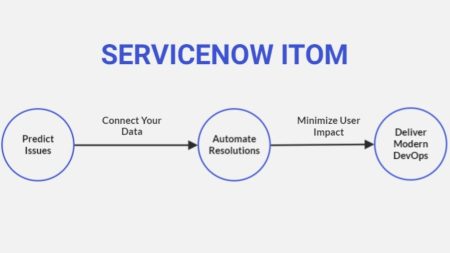
- ITOM for service mapping, events, and health insights
- Performance Analytics for delivery and operational KPIs
Together, these capabilities align development speed with operational stability.
What is the Business Value of ServiceNow DevOps?
The business value of ServiceNow DevOps lies in its ability to:
- Enhance Efficiency: By automating the software development lifecycle, ServiceNow DevOps reduces manual efforts and errors, increasing productivity and enabling teams to focus on innovation rather than routine tasks.
- Improve Collaboration: It fosters a culture of collaboration between development and operational teams, breaking down silos and ensuring that projects move forward smoothly and efficiently.
- Increase Deployment Speed: The streamlined processes and automated pipelines result in quicker deployment times, enabling organizations to respond rapidly to market demands and maintain a competitive edge.
How ServiceNow Accelerates DevOps Efforts?
ServiceNow accelerates DevOps efforts through several vital mechanisms:
- Automation of Workflows: By automating various stages in the development pipeline, ServiceNow eliminates repetitive tasks and significantly reduces the potential for human error. This automation optimizes the workflow and enables DevOps teams to dedicate more time to tasks that require their expertise.
- Real-time Visibility and Diagnostics: By providing dashboard views and real-time analytics, ServiceNow gives all stakeholders instant access to the status of development projects, incident management, and change requests (it’s something like ServiceNow Reporting). This visibility allows for proactive problem-solving and more informed decision-making.
- Integration with Existing Tools: ServiceNow integrates seamlessly with various development and operation tools, creating a unified platform that enhances communication and coordination across teams. This integration supports a more cohesive and efficient DevOps culture by facilitating a single source of truth for project statuses and metrics.
Fast-track and Simplify Development to Deployment
DevOps in ServiceNow approach emphasizes efficiency and speed and aims to foster a culture of continuous improvement within organizations. This culture shift facilitates the ongoing refinement of processes, products, and services, driving innovation and sustaining competitive advantage.
Implementation of Changes More Effortlessly
ServiceNow DevOps integration streamlines workflows and significantly enhances businesses’ adaptability to changes in market demands. So, it represents a strategic move towards achieving operational excellence and higher customer satisfaction.
Improved Connectivity and Integration
ServiceNow’s capability to foster improved connectivity and integration among different software tools is a testament to its versatility and effectiveness in DevOps. Above all, it eliminates silos, ensuring that every member of the development and operations teams is on the same page, which significantly boosts productivity and innovation.
Good In-depth Insights Collaboration
Through its comprehensive analytics capabilities, ServiceNow provides in-depth insights that empower team collaborations, enabling a more analytical approach to problem-solving. It turns data into actionable intelligence, thereby supporting the strategic planning and execution of projects with precision.
GRC Management
ServiceNow’s integration with GRC (Governance, Risk, and Compliance) management transforms the traditional approach to compliance, risk management, and governance. It automates these processes, making them more efficient, transparent, and aligned with business objectives. Its powerful analytics, seamless connectivity, and GRC management capabilities provide a comprehensive solution for businesses aiming to stay ahead in the fast-paced digital landscape.
Does ServiceNow DevOps Integrate with ServiceNow SecOps?
ServiceNow DevOps and ServiceNow Security Operations (SecOps) integrate to create a secure-by-design software delivery pipeline, where security controls are embedded directly into development, deployment, and operations without slowing release velocity. Briefly, DevOps focuses on speed and reliability, while SecOps focuses on risk and security. Their integration ensures software is delivered fast and safe, using shared data, automation, and governance across the ServiceNow platform.
DevOps + SecOps in ServiceNow
When integrated, ServiceNow DevOps and SecOps connect:
- CI/CD pipelines (code → build → deploy)
- Security tools (SAST, DAST, SCA, vulnerability scanners)
- Change management and risk evaluation
- Incident and vulnerability response
This integration connects code, changes, vulnerabilities, incidents, and business impact into one workflow. The result is a closed-loop DevSecOps model where security is proactive, contextual, and automated.
In conclusion
So, what is ServiceNow DevOps? ServiceNow DevOps bridges the gap between rapid software delivery and operational control. By integrating CI/CD pipelines with ITSM and ITOM, it enables organizations to deliver changes quickly while maintaining visibility, compliance, and service reliability. ServiceNow DevOps can revolutionize organization’s approach development and operations, leading to enhanced productivity, stronger collaboration, and a more agile response to market changes. In short, ServiceNow DevOps enables organizations to:
- Automate and streamline change approvals for deployments
- Connect CI/CD pipelines to ITSM and ITOM data
- Reduce deployment risk with real-time context
- Improve release velocity while maintaining compliance
- Provide end-to-end visibility from code commit to production