How Enterprise Teams Build Faster Without Losing Control
Enterprise software teams are no longer asking whether AI can help write code. They are asking a more important question: how can AI speed up delivery without weakening control, quality, security, or governance? That is where AI software development services become a serious enterprise topic. The shift is moving beyond simple coding assistants. Copilots help developers work faster, but enterprise delivery needs more than faster code. It needs structured workflows, reliable testing, secure DevOps pipelines, governance rules, and measurable business outcomes.
Gartner highlights AI-native development platforms as a strategic technology trend for 2026. DORA’s 2025 research adds an important warning: AI amplifies existing engineering strengths and weaknesses. In simple terms, strong delivery systems get stronger with AI, while weak systems expose more risk. For enterprise teams, the message is clear: AI adoption must be designed, governed, and connected to real software delivery.
From Coding Assistants to AI-Aware Delivery
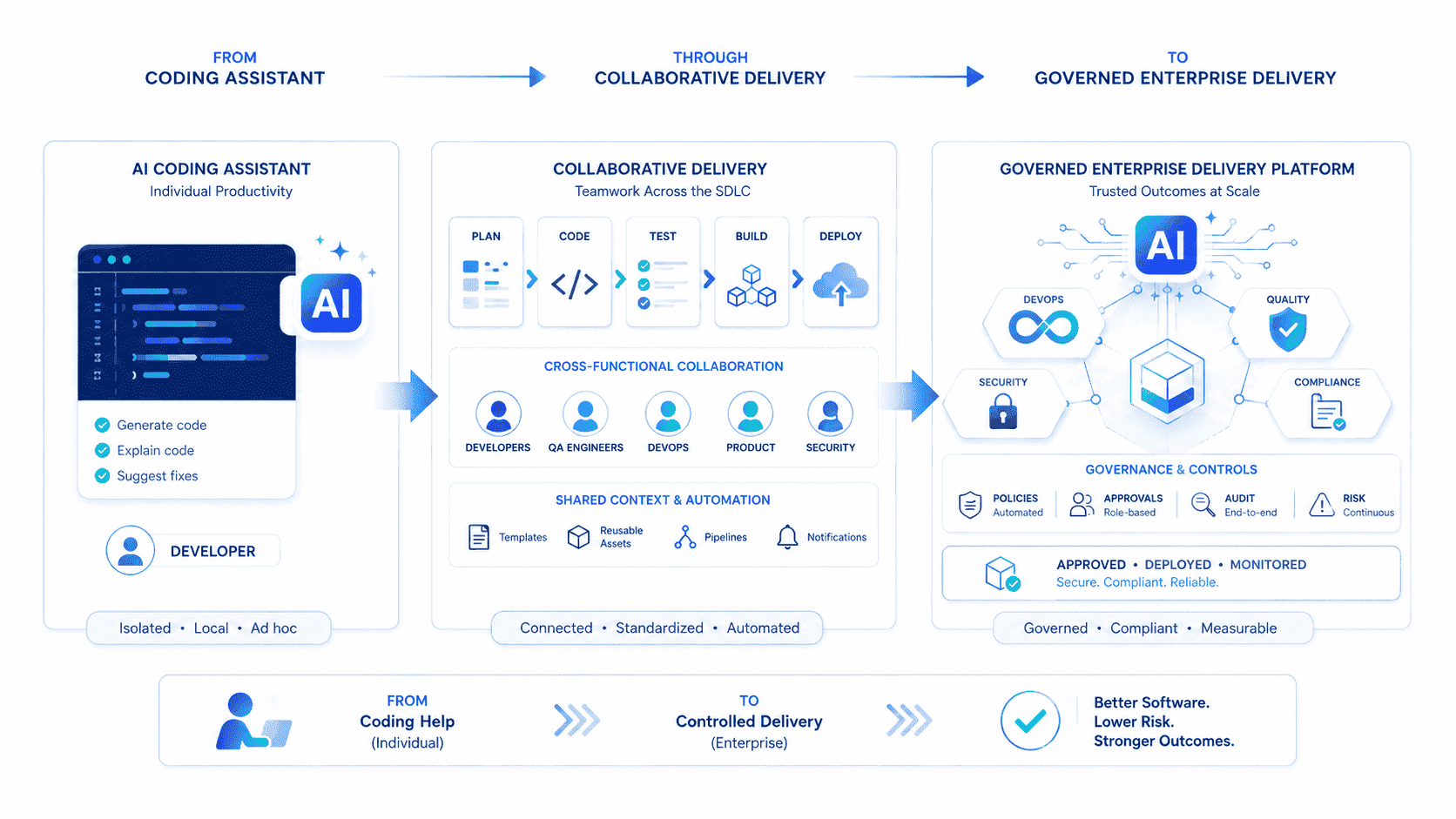
The first wave of AI in development focused on individual productivity. Developers used generative AI development tools to draft code, explain legacy logic, write simple tests, and speed up repetitive tasks. This created value, but it also had limits. A faster developer does not automatically create a faster delivery organization. Enterprise software delivery includes planning, architecture, security, QA, DevOps, compliance, documentation, release management, and long-term maintenance. If AI only supports isolated coding tasks, the business impact stays limited. The next stage is AI-aware delivery. This means AI is embedded across the software lifecycle, while human teams keep control over decisions, architecture, quality, and risk.
What Makes Software Development AI-Native?
AI-Native software development means AI is not treated as a side tool. It becomes part of the delivery model. It supports how teams plan, build, test, review, release, and improve software. The goal is not to replace engineers. The goal is to help engineering teams work faster, reduce manual load, and make better delivery decisions. In practice, AI-native delivery can support:
- Requirements analysis
- Code generation and refactoring
- Legacy code explanation
- Test case creation
- Code review assistance
- Documentation drafts
- Security checks
- Release risk analysis
- Delivery performance insights
This is where AI native software development becomes valuable for enterprise teams. The challenge is not access to AI tools. The challenge is building a controlled delivery system around them.
Why Enterprise Teams Are Moving Toward AI-Native Delivery
Enterprise software is complex. There are legacy systems, integrations, data flows, user roles, compliance rules, and business-critical workflows. AI can help teams move faster, but without structure, it can also create hidden risks. Poorly managed AI adoption can lead to duplicated logic, inconsistent code, weak testing, unclear ownership, and security exposure. That is why enterprise AI development must be practical, governed, and measurable.
AI-native delivery helps businesses:
- Reduce repetitive engineering work
- Accelerate modernization projects
- Improve development velocity
- Strengthen QA coverage
- Support better documentation
- Improve delivery visibility
- Standardize engineering practices
- Move AI from pilot projects to production impact
The value is not simply “AI writes code.” The real value is faster, safer, and more predictable software delivery.
The Role of Generative AI in Modern Engineering Workflows
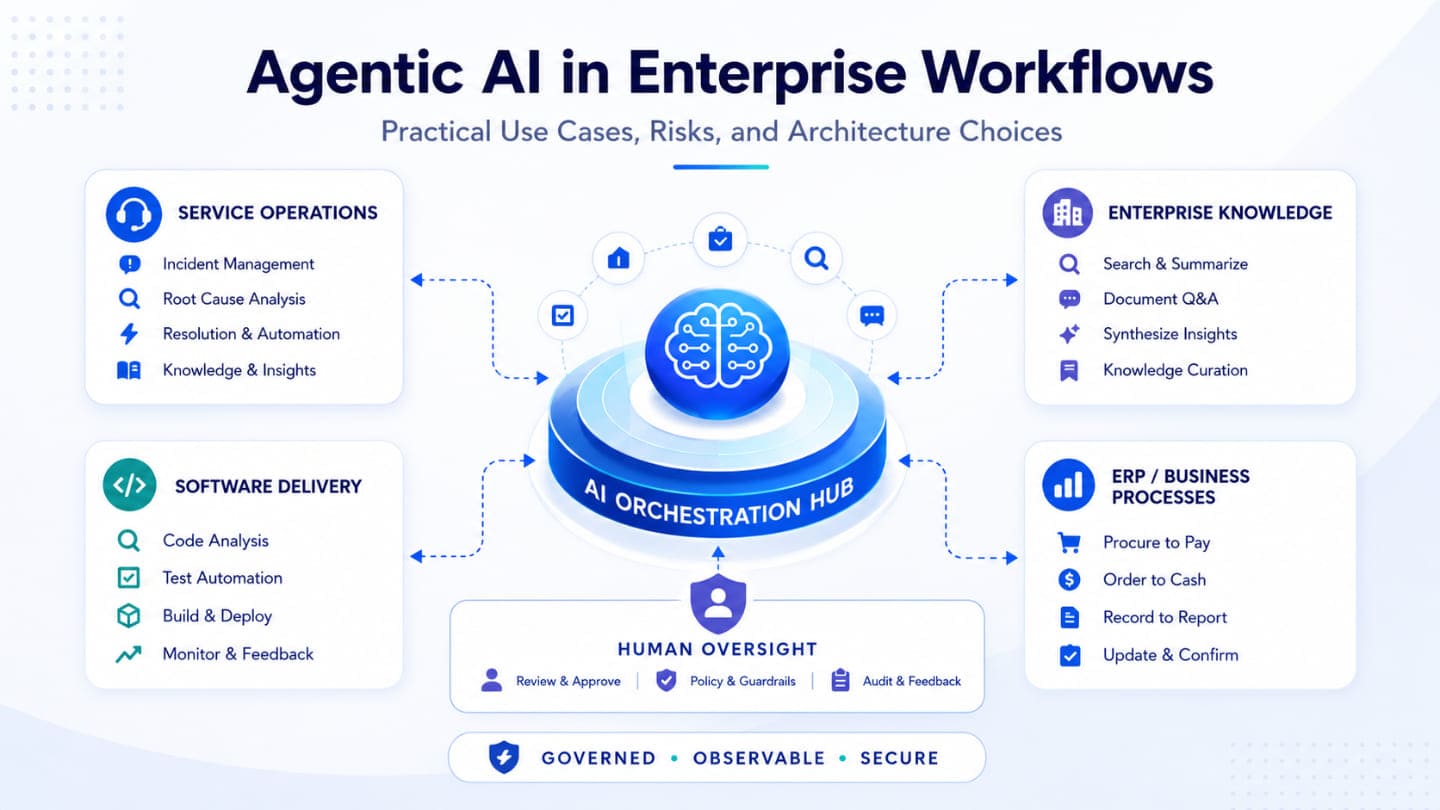
Generative AI can support engineering teams across many daily tasks. It can help developers understand unfamiliar code, generate boilerplate, suggest refactoring options, and create first-draft documentation. It can also help QA teams prepare test scenarios and help DevOps teams analyze pipeline issues. But generative AI development must be managed carefully. AI-generated output should not go directly into production without review. It must pass the same engineering standards as human-written work: code review, testing, security validation, and architecture alignment. The strongest results come when AI supports the team, not when it bypasses the team.
Where AI Helps Across the Software Delivery Lifecycle
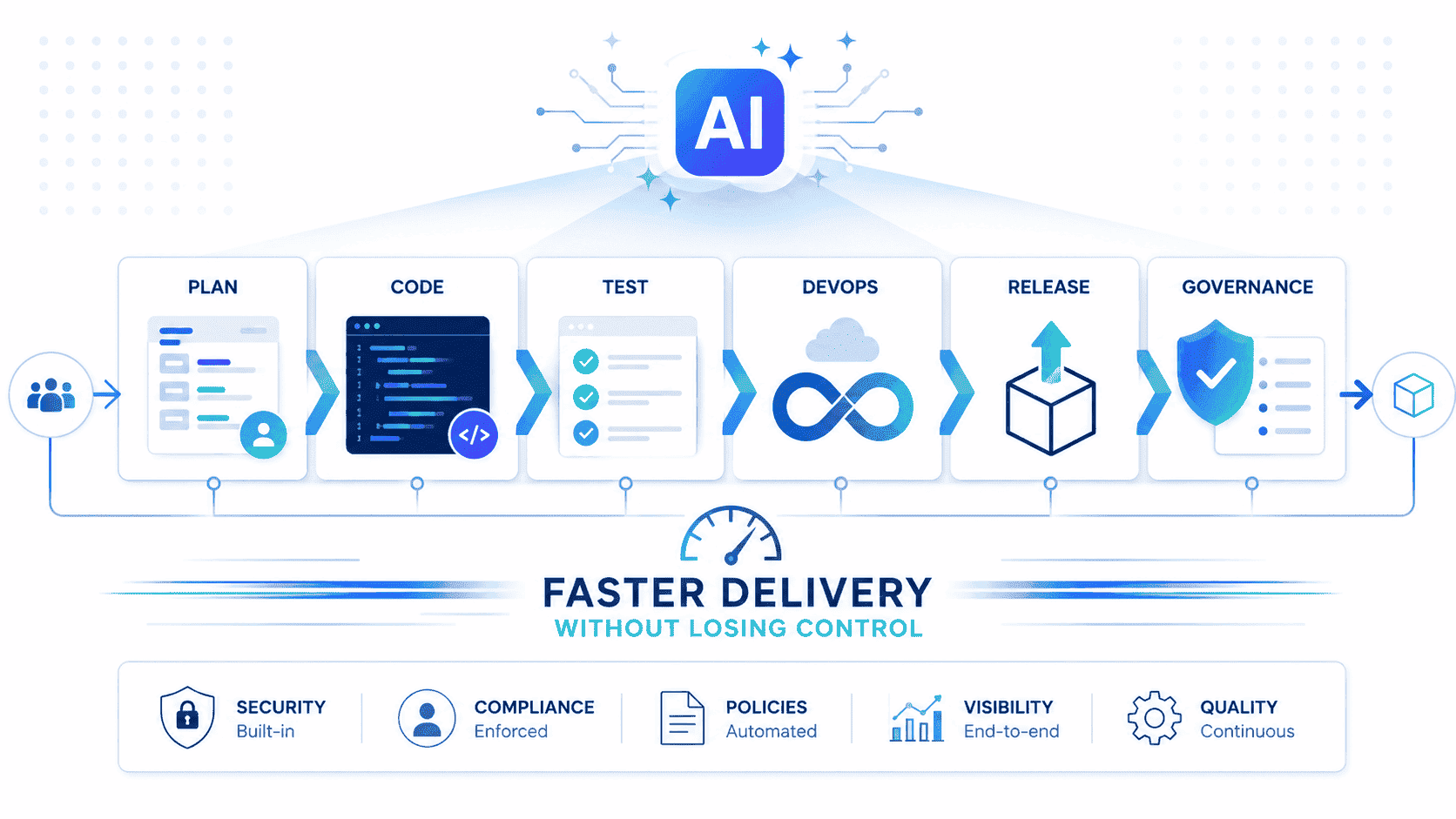
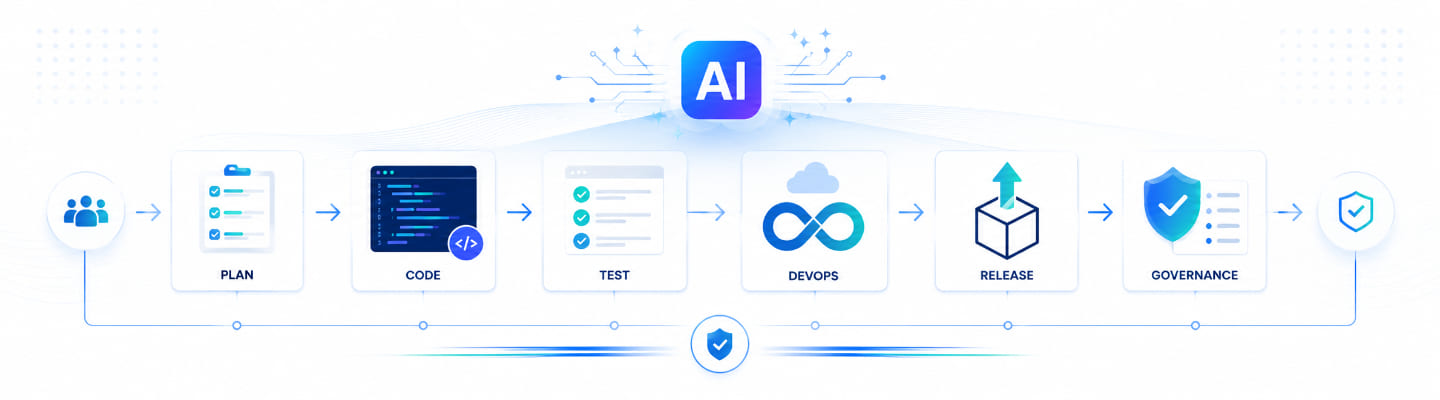
AI-native delivery works best when it supports the full lifecycle, not only the coding phase.
Requirements and Planning
AI can help analyze product requirements, summarize stakeholder input, identify gaps, and turn business needs into clearer technical tasks. This helps teams reduce ambiguity before development begins.
Development and Code Review
AI can help generate code drafts, explain complex logic, suggest improvements, and support code review. Still, human review remains essential. AI can accelerate development, but engineers must validate quality, maintainability, and architecture fit.
Testing and Quality Assurance
AI can support test case generation, regression planning, edge case discovery, and defect analysis. Strong quality assurance remains critical because AI-generated tests still need human validation and business-context review.
DevOps, Releases, and Monitoring
AI can help analyze build failures, detect release risks, summarize incidents, and support deployment decisions. When connected with DevOps services, AI can improve delivery speed while keeping release processes controlled and traceable.
Documentation and Knowledge Management
AI can reduce the documentation burden by drafting technical notes, release summaries, API explanations, and onboarding materials. This is especially useful for distributed teams and long-term enterprise projects.
The Governance Layer: Speed Without Losing Control
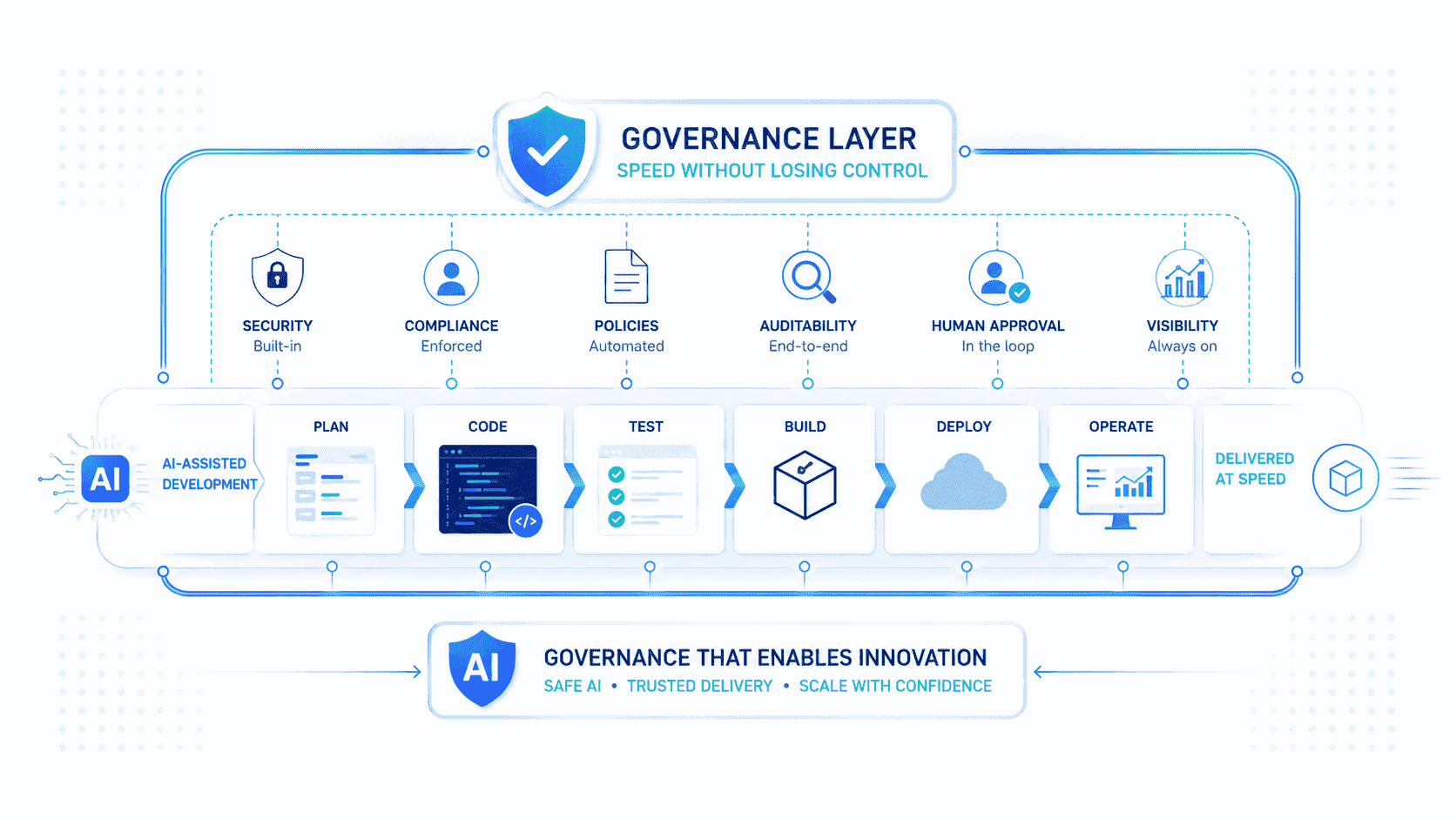
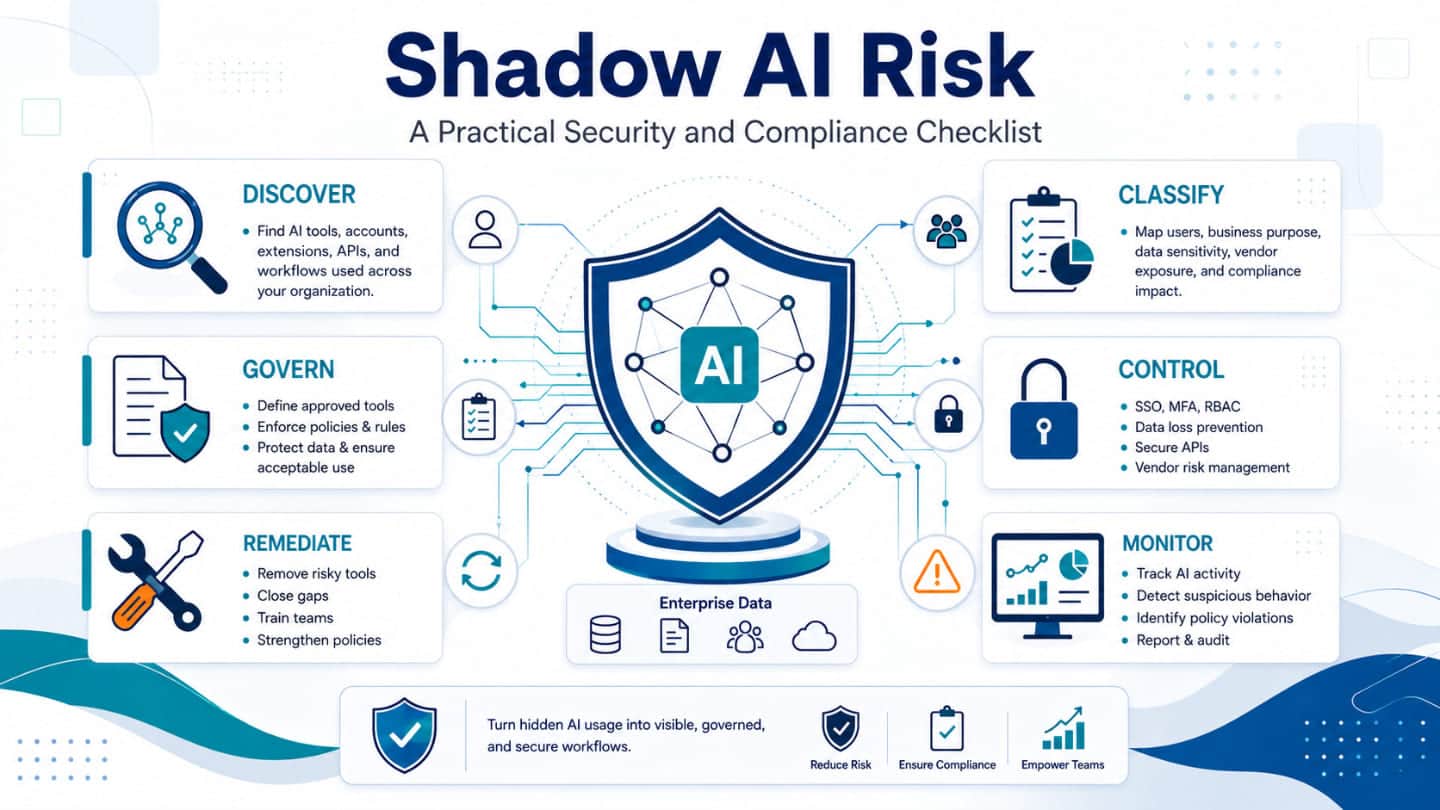
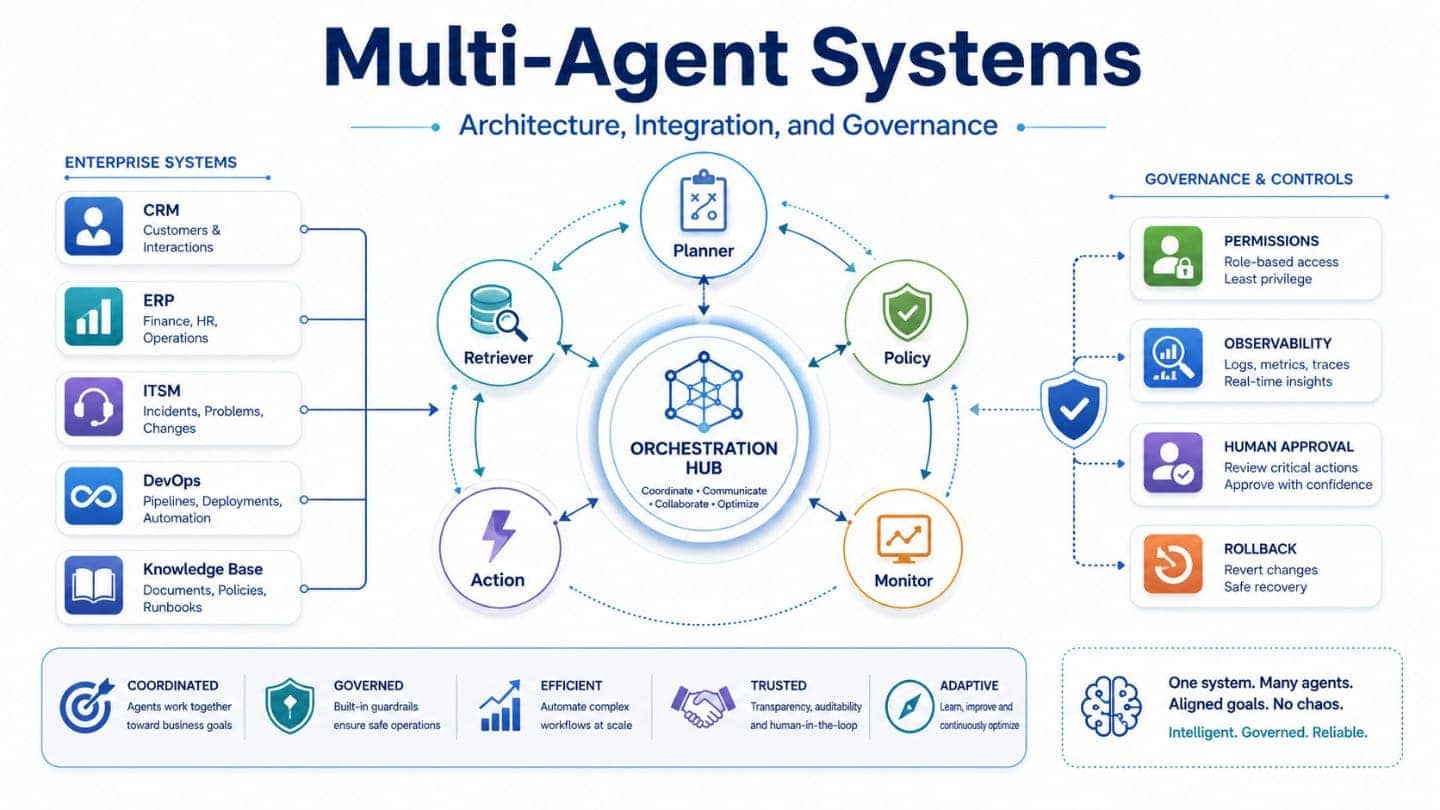
AI-native delivery needs governance from the start.Without governance, teams may use different tools, prompts, standards, and review processes. That creates delivery noise and increases risk. A strong governance layer defines:
- Approved AI use cases
- Secure tool usage
- Prompting rules
- Data protection limits
- Code review requirements
- QA validation steps
- Human approval points
- Audit and compliance expectations
- Delivery performance metrics
Governance does not slow AI down. It makes AI safe enough to scale. For enterprise teams, control is not optional. It is what turns AI from experimentation into a reliable delivery capability.
Key Risks Enterprises Should Manage Before Scaling AI
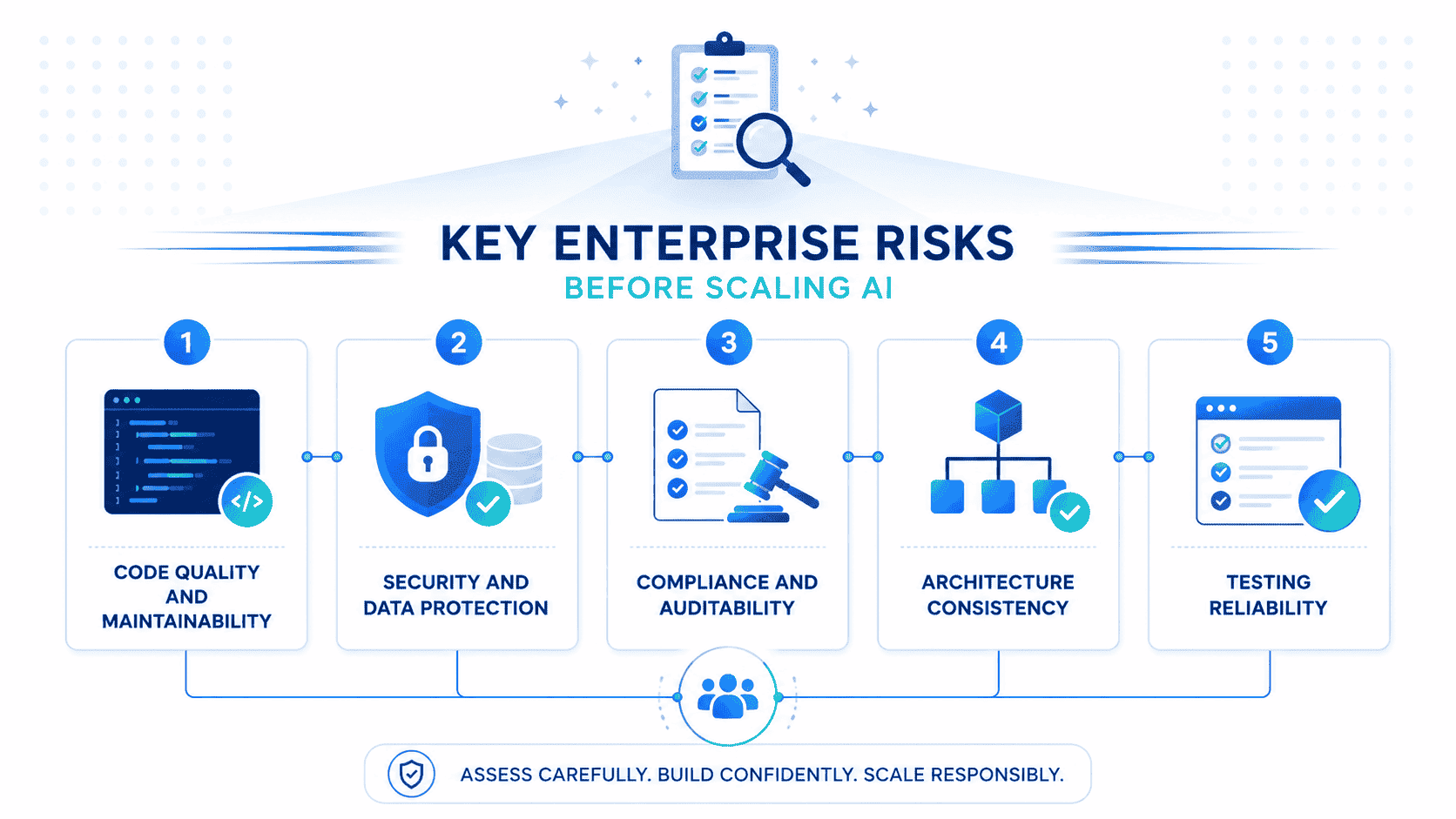
AI can create delivery value quickly, but risks must be assessed before large-scale adoption.
Code Quality and Maintainability
AI-generated code may work, but it may not be efficient, scalable, or easy to maintain. Teams should check AI-assisted code for structure, readability, duplication, performance, and long-term support.
Security and Data Protection
AI tools can introduce insecure patterns, unsafe dependencies, or data exposure risks. Teams need clear rules for what information can be shared with AI systems and how generated code is reviewed for security.
Compliance and Auditability
Regulated industries need traceability. Companies should know who approved AI-generated output, what was changed, what was tested, and how decisions were documented.
Architecture Consistency
AI may suggest local fixes that do not match the enterprise architecture. Engineering teams must ensure AI-supported work aligns with system design, integration patterns, scalability needs, and business goals.
Testing Reliability
AI can generate tests quickly, but fast test creation does not guarantee strong coverage. QA teams must validate whether tests reflect real business scenarios, edge cases, and production risks.
AI-Native Software Development Implementation Checklist
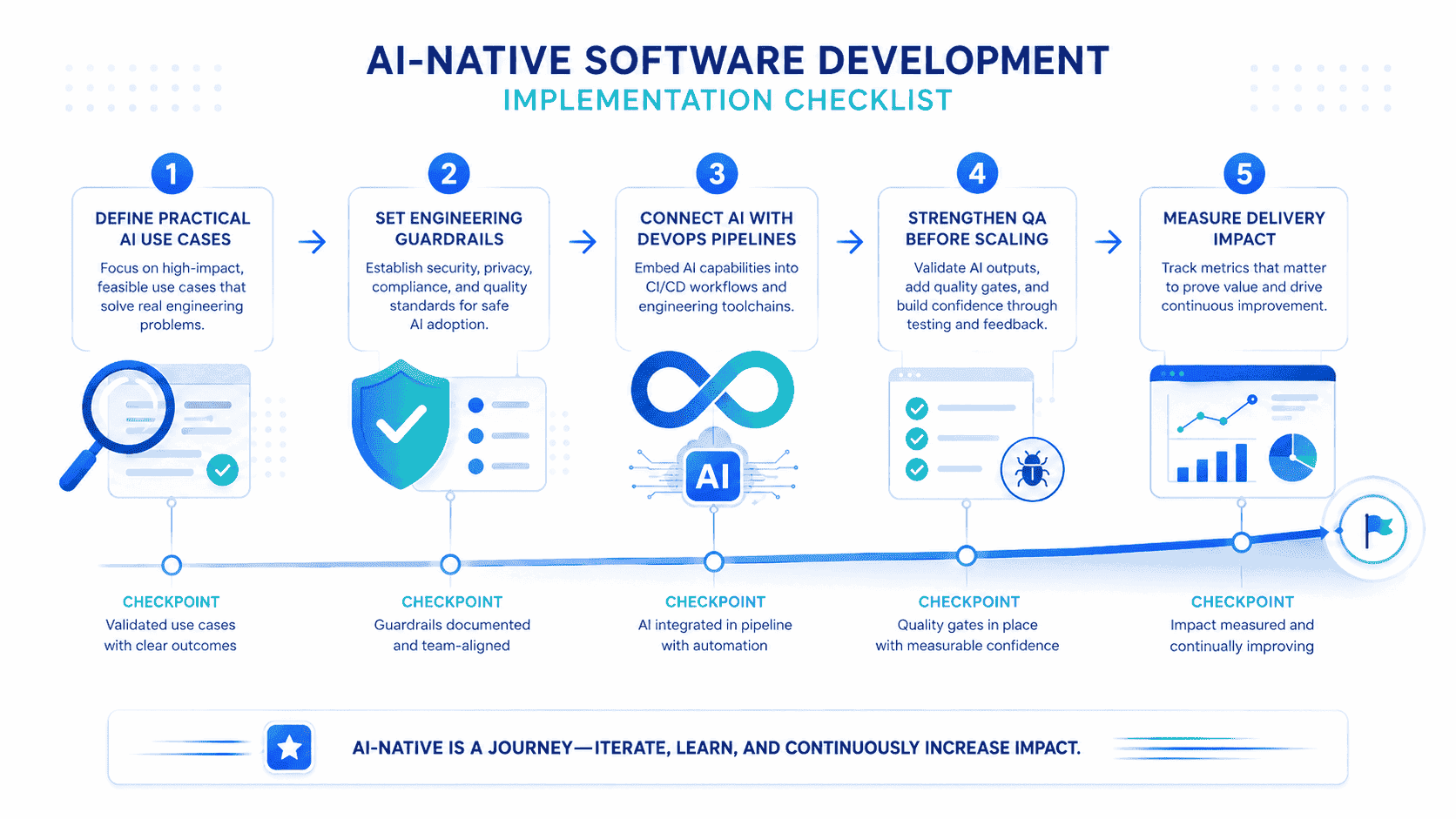
Enterprise teams do not need to transform everything at once. The safest path is to start with focused use cases, define guardrails, measure results, and scale what works.
Define Practical AI Use Cases
Start with low-risk, high-value use cases. Good starting points include:
- Code explanation
- Unit test generation
- Documentation drafts
- Legacy code analysis
- Refactoring support
- QA scenario creation
- Pull request review assistance
Avoid high-risk automation until the delivery model is mature.
Set Engineering Guardrails
AI should follow the same delivery standards as human-created work. Define rules for secure prompts, approved tools, code review, testing, documentation, access control, and human approval. Clear guardrails help teams move faster without creating uncontrolled risk.
Connect AI With DevOps Pipelines
AI-native delivery becomes stronger when it is connected to DevOps workflows. This includes CI/CD, automated testing, infrastructure automation, monitoring, security scanning, and release controls. GFL helps companies align AI-supported development with practical DevOps execution, so speed does not come at the cost of stability.
Strengthen QA Before Scaling
AI can increase delivery speed, but QA keeps delivery trustworthy. Before scaling AI across teams, companies should review test strategy, automation coverage, defect tracking, regression processes, and release validation. This helps prevent AI-assisted work from creating hidden quality gaps.
Measure Delivery Impact
AI adoption should be measured by outcomes, not tool usage. Useful metrics include:
- Cycle time
- Deployment frequency
- Defect leakage
- Test coverage
- Review time
- Rework rate
- Release stability
- Developer satisfaction
- Delivery cost
The goal is not more AI activity. The goal is better software delivery.
How GFL Helps Build an AI-Ready Delivery Model
GFL helps companies turn AI ambition into practical engineering execution. We do not treat AI-native delivery as a trend deck or a simple tool rollout. We help teams design delivery models that connect AI with software development, DevOps, QA, governance, and measurable business outcomes. Through our software development services, GFL supports companies that need scalable applications, modernization, integrations, and long-term engineering capacity. We can help with:
- AI-ready delivery model design
- Software development workflow modernization
- DevOps pipeline alignment
- QA strategy for AI-assisted delivery
- Engineering governance
- Legacy system analysis
- Secure AI implementation practices
- Practical rollout planning
The result is not uncontrolled automation. It is faster delivery with clear ownership, stronger visibility, and enterprise-grade control.
AI Works Best When Delivery Is Already Disciplined
AI-native software development is not about replacing software teams. It is about helping strong teams work with better systems. Companies with disciplined engineering, DevOps, QA, and governance will gain the most from AI. Companies with weak delivery processes should treat AI as a reason to modernize the system first. The future of enterprise delivery will not belong to teams that simply use more AI. It will belong to teams that know how to govern it, measure it, and scale it safely.
Plan an AI-ready delivery model with GFL.
FAQs
What is AI-native software development?
AI-native software development is an approach where AI supports the full software delivery lifecycle, including planning, coding, testing, documentation, DevOps, and governance. It goes beyond coding assistants and connects AI with controlled engineering workflows.
Why does it matter for enterprise software?
Enterprise software requires security, scalability, integration control, compliance, and long-term maintainability. AI can accelerate delivery, but only when it is managed through clear standards, QA validation, and governance.
How can a company start safely?
A company can start safely by choosing low-risk AI use cases, setting engineering guardrails, protecting sensitive data, keeping human review in place, and measuring delivery impact before scaling AI across teams.
What risks should be assessed first?
The first risks to assess are code quality, security, data exposure, compliance, testing gaps, IP protection, and architecture drift. These areas should be reviewed before AI-generated output becomes part of production workflows.
How can GFL help?
GFL helps companies design AI-ready delivery models, modernize software development workflows, strengthen DevOps pipelines, align QA processes, and build governance around AI-assisted engineering.